Final Survation Holyrood Poll of the 2026 Elections
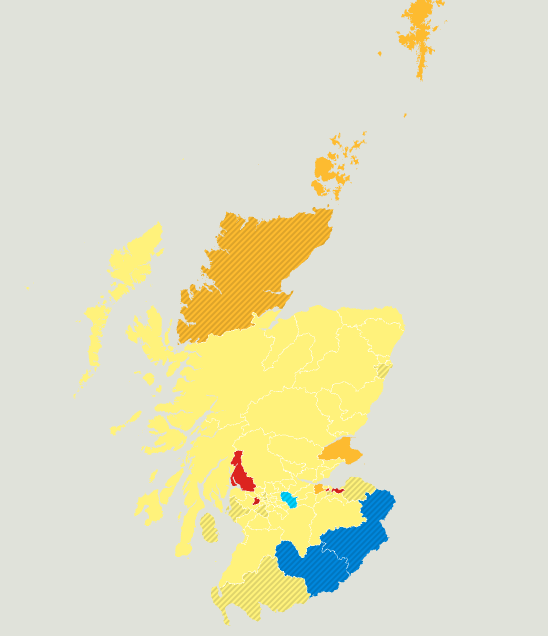
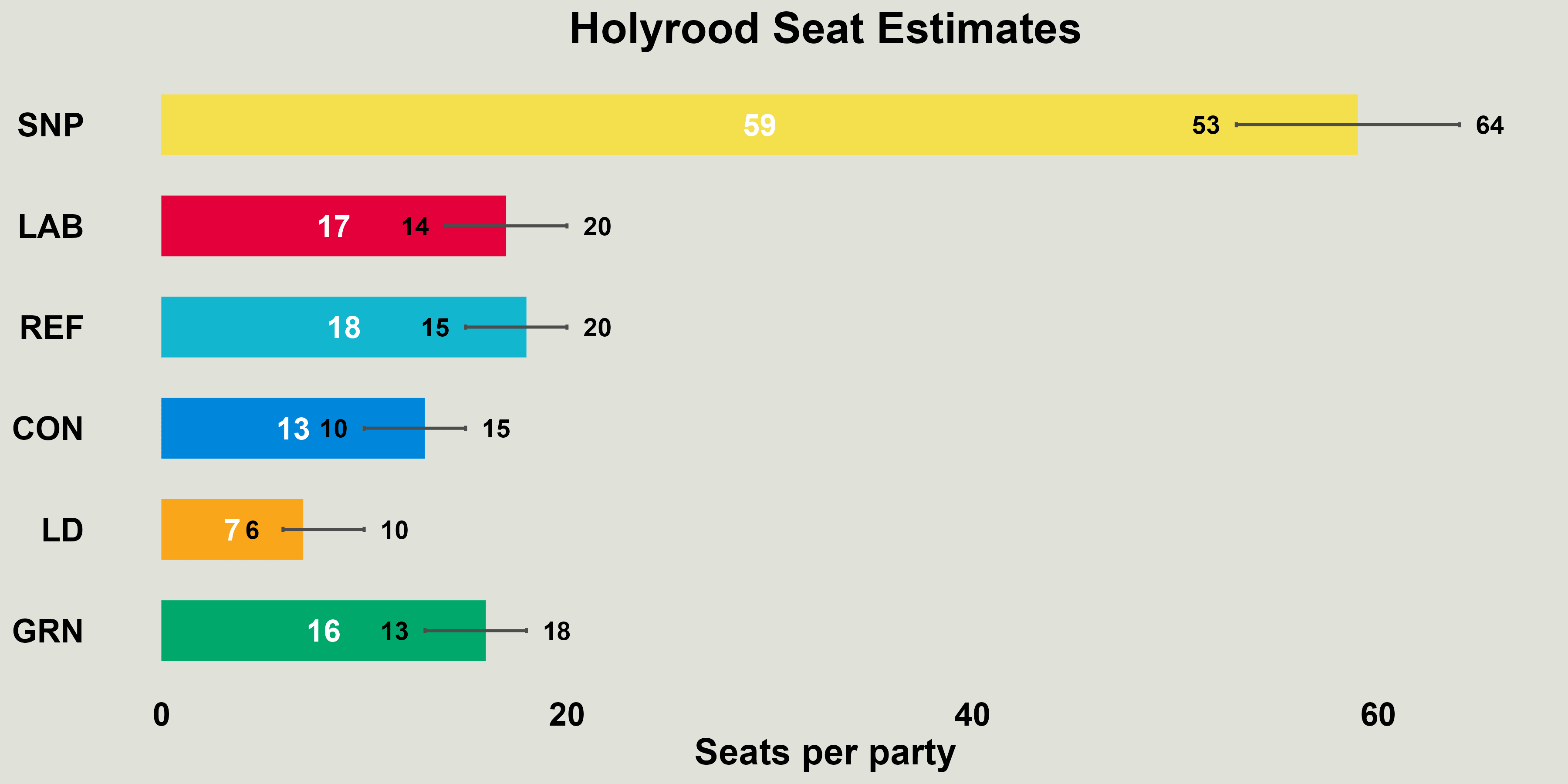
Survation’s final Holyrood polling of the cycle indicates that the Scottish National Party is almost certain to form the next government, albeit without an overall majority. Our MRP for the 7 May Holyrood election estimates that the SNP win 59 seats at the midpoint – six short of the 65 needed for a parliamentary majority. Reform UK, a party that held no seats in Holyrood four years ago, could enter parliament as the second-largest force, ahead of the Greens and the Conservatives.
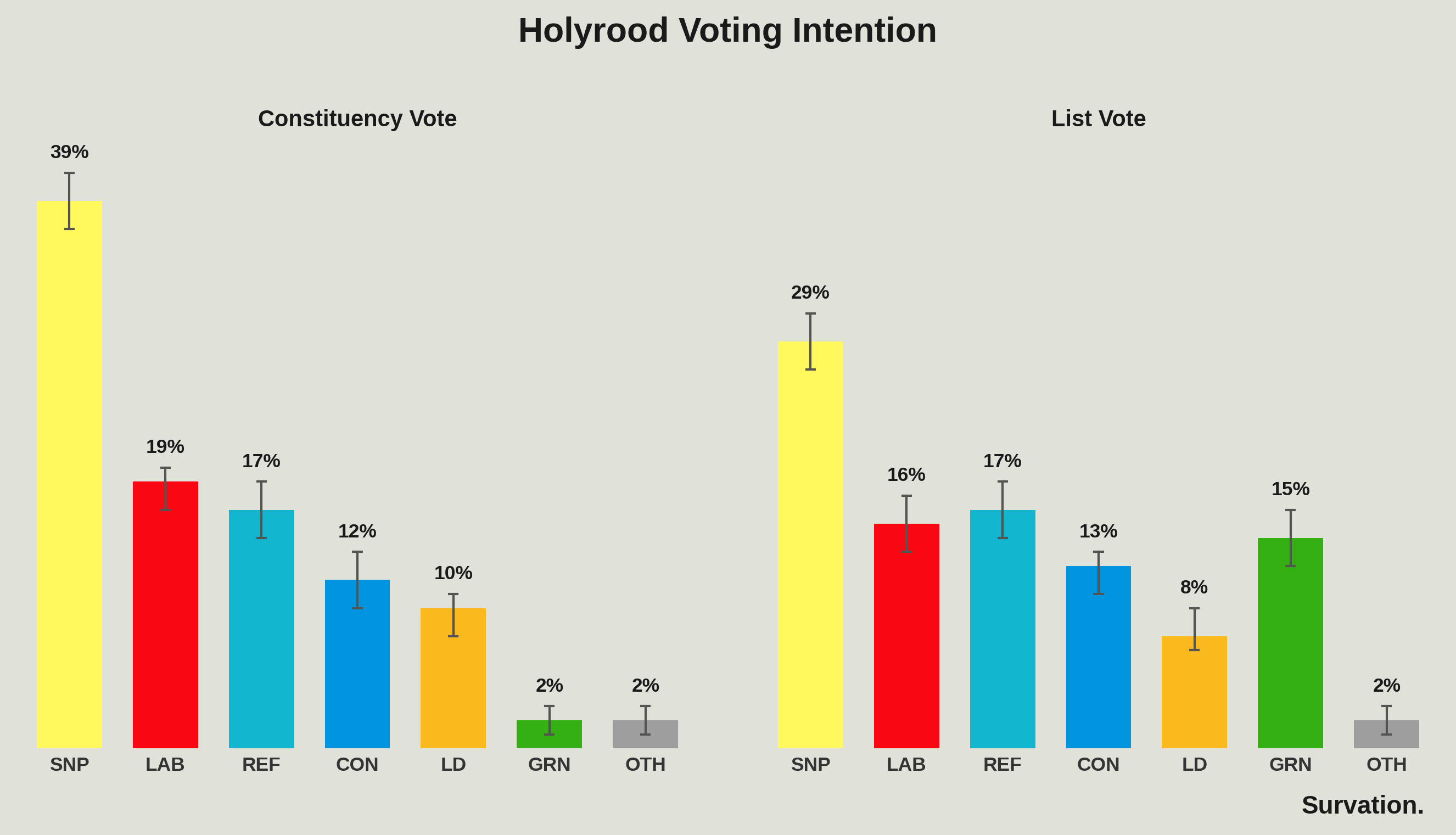
On the constituency vote, the SNP leads on 39%, ahead of Labour on 19%, Reform UK on 17%, the Conservatives on 12%, and the Liberal Democrats on 10%. The Greens contest only a handful of constituencies and poll at around 2% nationally.
SNP largest party, but short of a majority
The SNP is on course to win the most seats by a wide margin, but our central projection of 59 seats sits six below the 65 needed for a parliamentary majority. Scotland’s parliament has 129 MSPs elected across 73 constituency seats (first-past-the-post) and 56 regional list seats (proportional representation across eight regions).
In constituency contests alone, the SNP is projected to win around 51 seats outright. A further 14 constituencies are highly marginal between two or three parties, with no party holding a clear majority of our model’s simulation outcomes. A single-party SNP majority is possible, but it is not the most likely result.
Could Reform UK become Scotland’s second-largest party?
With 17% of the list vote and a central estimate of 18 seats, Reform UK could enter Holyrood as the second-largest political force, ahead of Labour on 17 seats and the Greens on 16.
Four years ago, Reform UK held no representation in the Scottish Parliament. Our model projects the party winning list seats in each of Scotland’s eight regions, as well as having a chance to pick up two constituency seats. Cunninghame North is the most contested constituency seat between the SNP and Reform UK, with our model giving each party a 55% and 45% chance of winning, respectively.
What is driving this? Reform UK’s vote is strongest among social renters and in more deprived communities, particularly in post-industrial and semi-rural areas in south-west Scotland, Ayrshire, and parts of the North East. The party’s support is geographically concentrated enough to translate into constituency wins in a way that earlier polling of Scotland may have underestimated.
The pro-independence majority
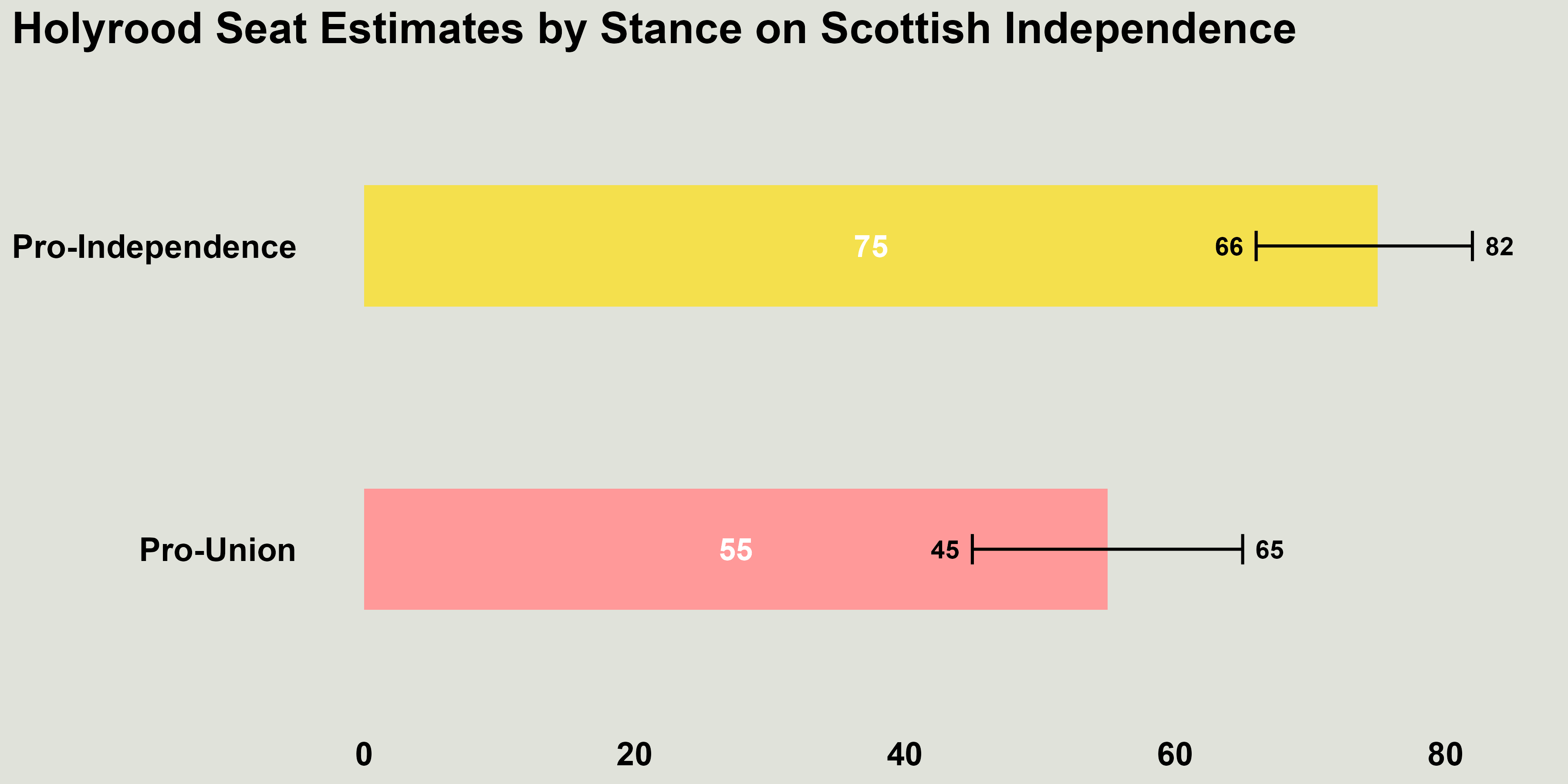
SNP and Greens combined are projected to win approximately 75 seats, well above the 65-seat majority threshold. A pro-independence majority in parliament looks secure even if the SNP cannot govern alone. The Greens are projected to win 16 list seats and one constituency seat. Combined with the SNP’s 59 seats, that gives pro-independence parties around 75 seats in total. An SNP minority government backed by the Greens on confidence and supply would command a comfortable parliamentary majority.
Seats to watch
The most interesting story on the constituency map is not about SNP strength or Labour recovery but likely to be about a party that did not contest these seats at all four years ago – Reform UK. On notional 2021 estimates (the 2021 result recalculated for the new 2026 boundaries), Airdrie was held by the SNP with 51% of the vote among decided voters, against Labour’s 33%, and Reform UK were not on the ballot. Our model now indicates that Reform UK has a 47% probability of winning the seat.
Cunninghame North tells a similar story. The SNP held the seat notionally in 2021 on 49% against a Conservative second place on 28%. That Conservative vote has almost entirely migrated to Reform UK, and the seat is now a statistical tie with the SNP and Reform both on 33% of the vote, with a 55/45 win probability split.
A second big story is the near-total collapse of the Conservative constituency vote outside a handful of seats in southern Scotland. In Eastwood, the Conservatives won a notional 42% in 2021 under the new boundaries; the highest Conservative share of any constituency in our marginals table. Our model gives them a 2% probability of winning it this time, with the race now between the SNP at 60% and Labour at 38%.
In Galloway and West Dumfries, where the Conservatives held a notional 47%, the same fragmentation has allowed the SNP to open a clear lead of 61% to 38%. Reform UK again takes a chunk of the right-of-centre vote (16%), splitting it just enough to make the seat comfortable for the SNP. The only southern constituency that the Conservatives are more likely to hold than not is Dumfriesshire, though on identical vote shares of 34% each, with Reform UK and Labour dividing the rest, it is a coin-flip at 51/49 to the Conservatives.
The most unusual two-way fight is in Glasgow Kelvin and Maryhill, where the Greens are making a serious constituency bid. In 2021, this was SNP 45%, Labour 28%, Greens 15%. Our model now has SNP 32%, Greens 29%, Labour 22%, and gives the Greens a 38% probability of winning. The Greens have a 15-percentage-point lead among private renters over social renters nationally, and this seat has one of the highest private-renter populations in Scotland. If the Greens are going to win a constituency seat, this is the most likely place.
Methodology
Survation’s MRP (multilevel regression and poststratification) model for the 2026 Scottish Parliament election is based on a sample of 5,025 residents in Scotland aged 16+. Data collected using mixed online and telephone methodology between the 20th April – 5th May 2026. Seat projections are derived from 4,000 posterior draws. Constituency seats represent the sum of each party’s win probability across all 73 seats. List seat projections apply the D’Hondt method to each of Scotland’s eight regional list areas. All figures are expressed as averages with 90% uncertainty intervals unless otherwise stated.
MRP estimates can be downloaded here.
Notional results stated throughout are based on Chris Hanretty’s estimates and can be found here.
Survation is an MRS Company Partner and a member of the British Polling Council.
________________________________________
Survation. is an MRS company partner, a member of the British Polling Council and abides by their rules. To find out more about Survation’s services, and how you can conduct a telephone or online poll for your research needs, please visit our services page.
If you are interested in commissioning research or to learn more about Survation’s research capabilities, please email researchteam@survation.com, or visit our services page.
For press enquiries, please call 0203 818 9661 or email media@survation.com
< Back