The path to winning over the three segments of the Labour Party
Since May’s local elections, talk of a Labour leadership contest has been unceasing. We have ourselves taken a keen interest in the prospect. But Labour members are not monolithic, and any future candidate must strive to bring together different factions within the party. On behalf of the Joseph Rowntree Foundation, our March poll of Labour members with LabourList paints a clear picture of the size and attitudes of different membership factions that any prospective candidate will need to win over.
An introduction to the Idealists, Ideologues, and Instrumentalists
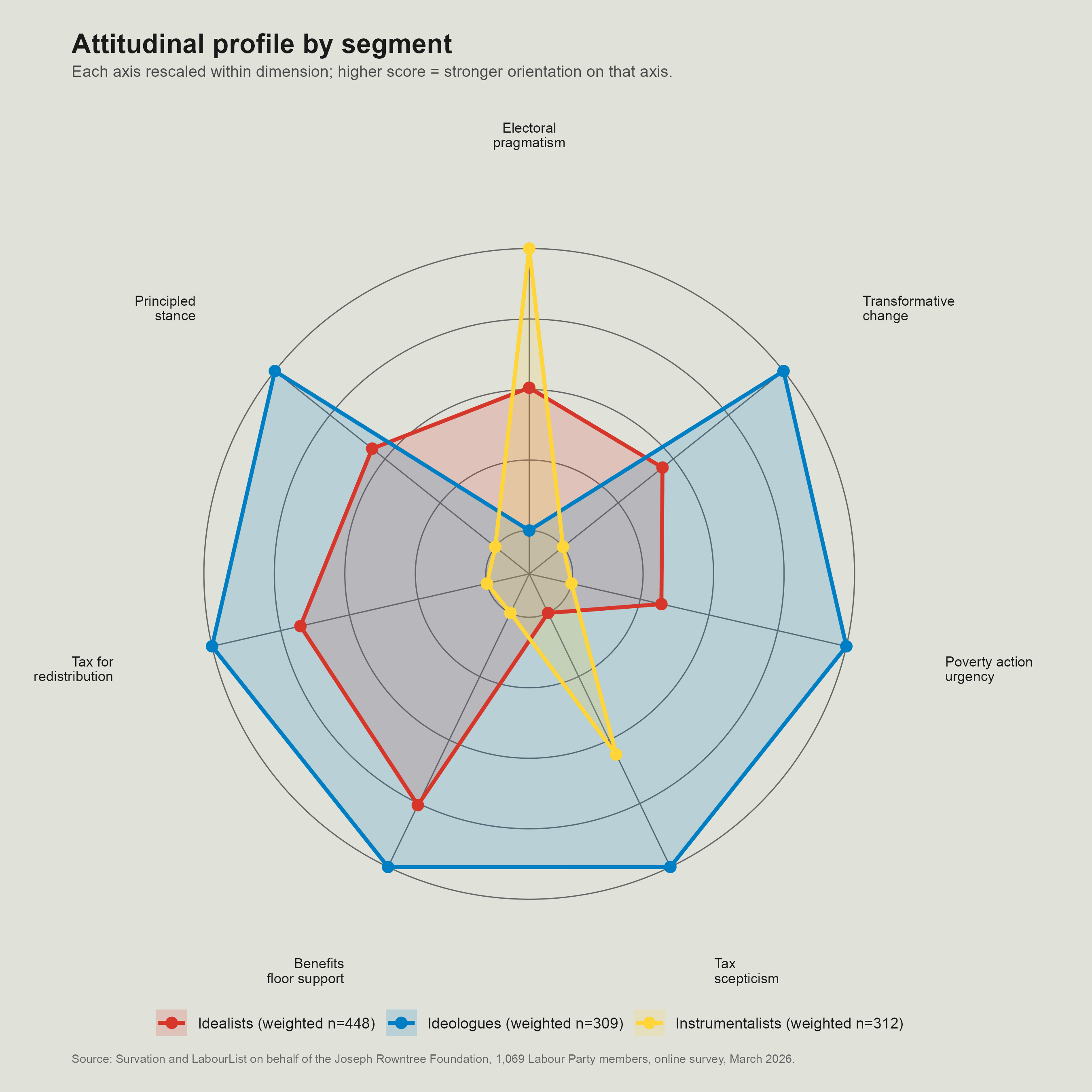
Our segmentation of the Labour membership took into account their responses to attitudinal questions about party strategy, values, and political vision. Our analysis led to the following three groups:
– Idealists (42%): left-of-centre economically, supportive of transformative change, but open to considering candidates in a leadership contest and split on the party’s current performance
– Ideologues (29%): transforming society is the party’s primary purpose, believe Corbyn was taking the party in the right direction in 2015, and are the most dissatisfied with the party at present
– Instrumentalists (29%): see Labour as a governing/professional project rather than a social movement, with electoral success the primary objective, and most in favour of the current leadership
Across the three groups, Instrumentalists are notably smaller than their institutional prominence might have suggested. They are not the leading segment among members, but their higher propensity to be working in politics or policy means their views can achieve disproportionate impact within party structures. Ideologues, on the other hand, are disaffected but present, representing a potential pool of support if a candidate engages with them, but a source of friction if they do not. Lastly, Idealists are the pivotal, swing segment. Being the largest group that is currently split on the party’s direction, and demonstrating moderate attitudinal positions on most measures, potential candidates should be careful not to neglect them through being distracted by ideological poles.
The names of these segments are similar to those used by Labour Together in 2020. However, the data and methodology of the way these segments have been derived have changed alongside the size and composition of the membership. Therefore, the two segmentation approaches are not directly comparable.
In the event of a leadership contest, how candidates propose to tackle the cost-of-living crisis and poverty may prove decisive
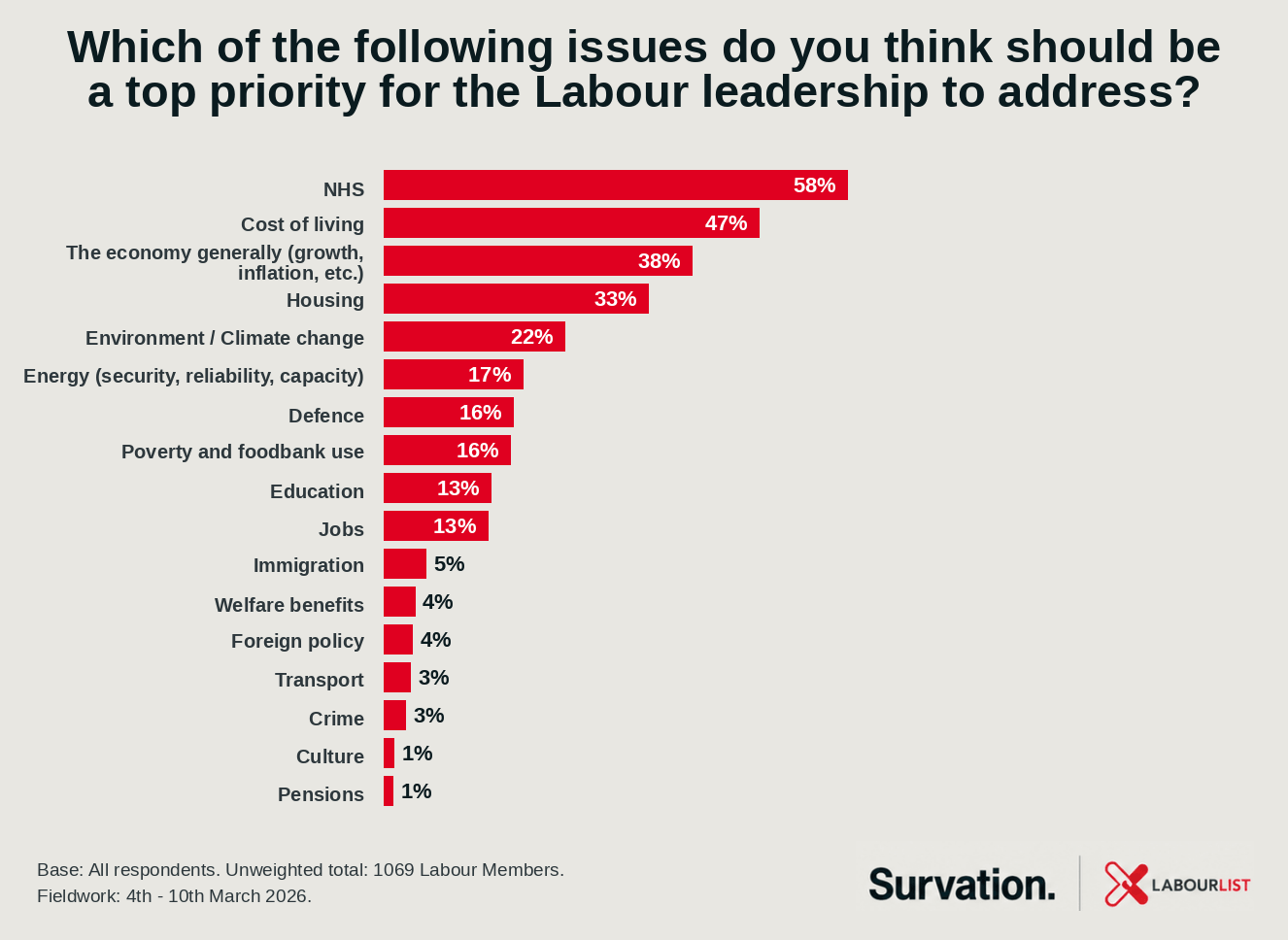
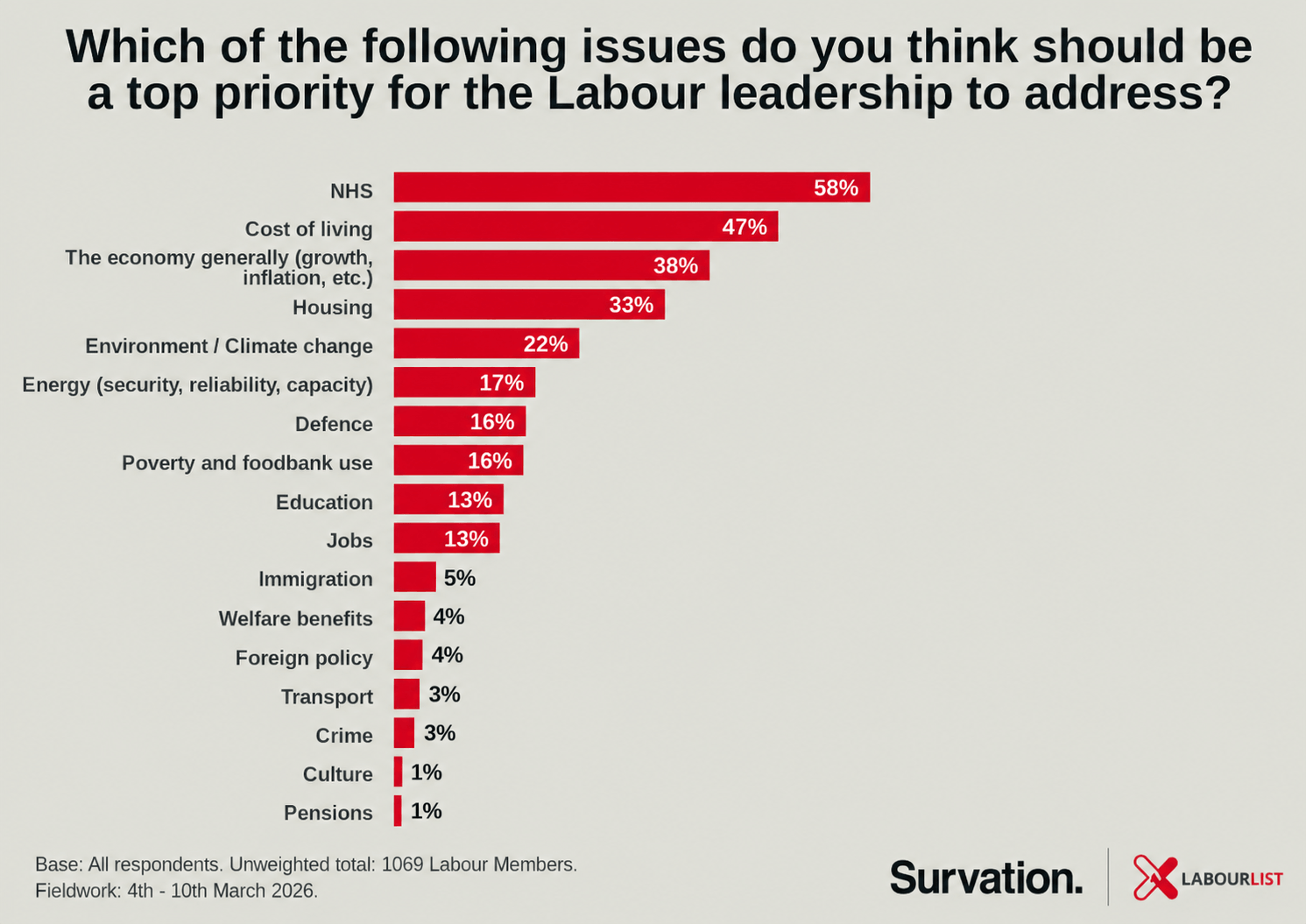
When asked what should be a priority for the Labour leadership to address, there were clear issues at the head of the pack: NHS (58%), cost of living (47%), and the economy generally (38%). Instrumentalists differ from the rest of the membership here, with the economy being the top priority for them (55%), then followed by the NHS (48%) and cost of living (48%).
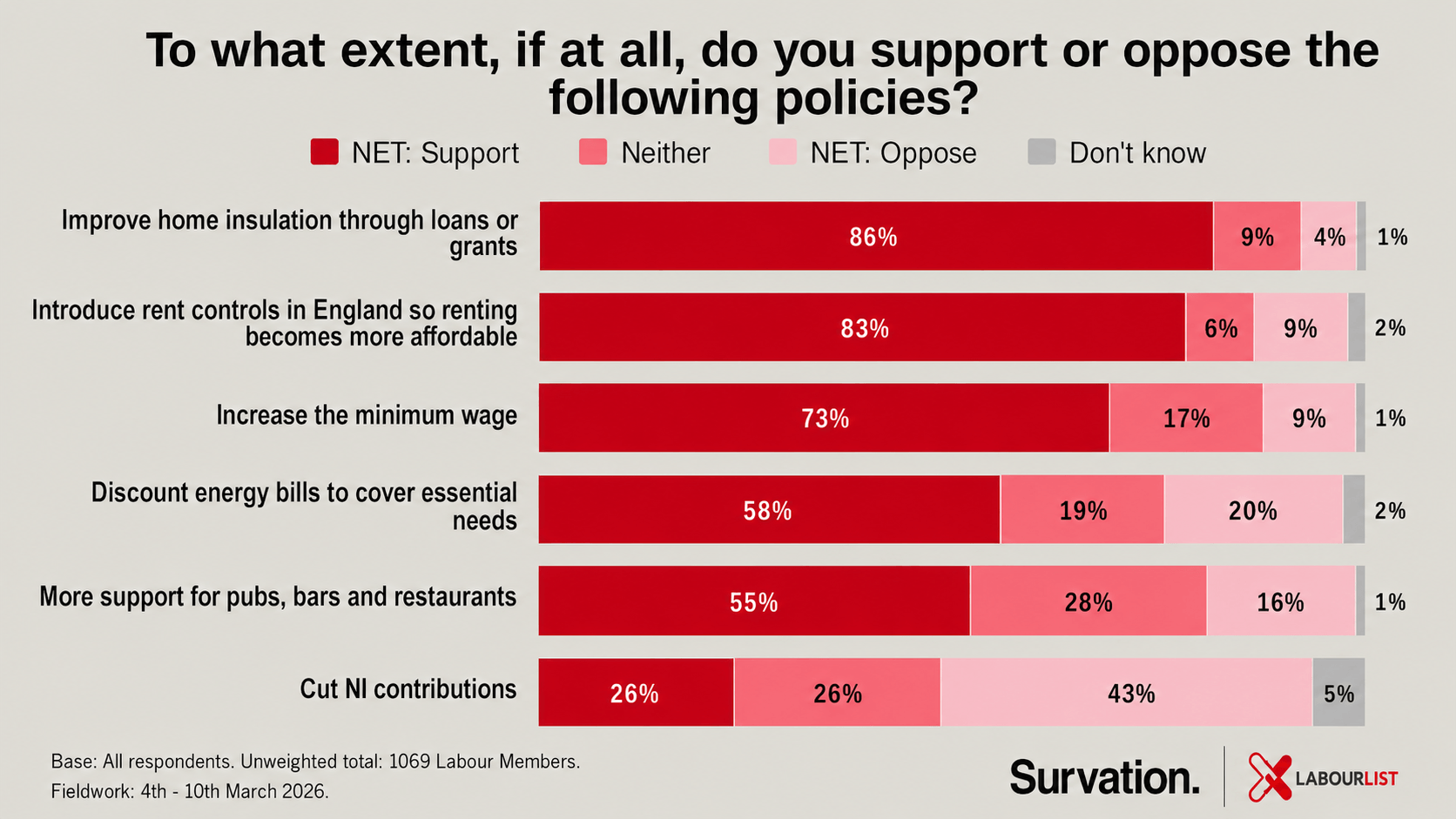
On cost of living specifically, there was strong support for various alleviating measures. A large majority of members supported: improving home insulation to lower energy costs (86%), introducing rent controls (83%), and increasing the minimum wage (73%). Smaller majorities also supported giving everyone discounts on their energy bills (58%) and supporting the hospitality sector to make going out more affordable (55%). In general, Ideologues were most supportive of these policies, followed by Idealists and then Instrumentalists.
Only cutting NI contributions was more opposed than it was supported (43% vs 26%), which held across all of the segments.
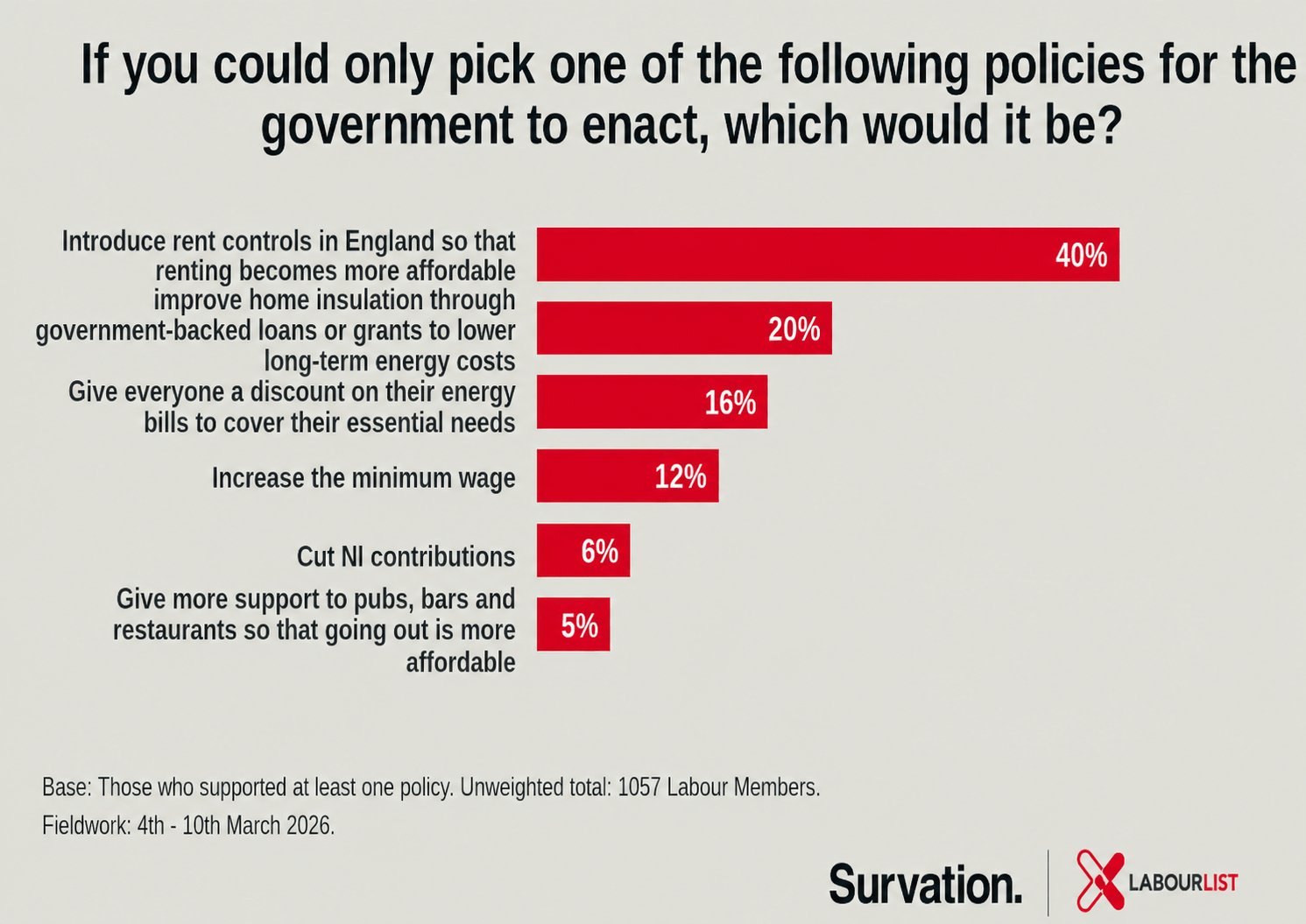
Of those supporting at least one of these policies, if prompted to pick which they would like to see the government enact if there could be only one, rent controls emerged as the leading policy (40%). After that, home insulation was the top choice of 20% of members, followed by discounts on energy bills (16%).
Ultimately, whatever action is proposed or ends up being taken, members are clear on the scale of the problem: 9 in 10 (88%) believe the cost-of-living crisis will require the government to take major action. This holds up across the segments, from Instrumentalists (80%) up to the Ideologues (95%).
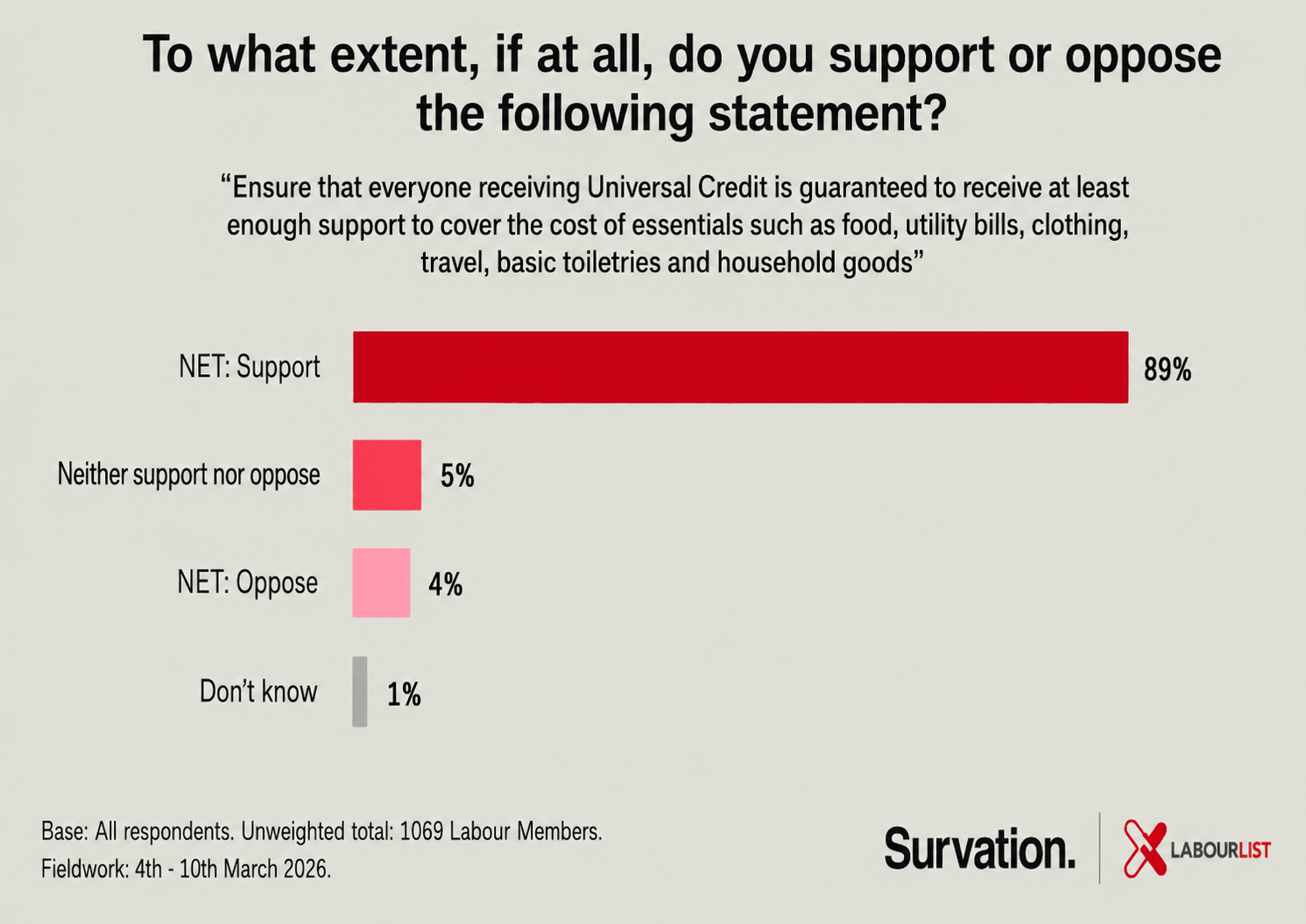
Alongside the cost-of-living crisis, poverty and social security is another area where members want to see significant change. Here, 81% thought that reducing poverty and food banks would require major government action. Measures to tackle these issues included guaranteeing those on Universal Credit receive enough support to cover essentials – supported by 89% of members.
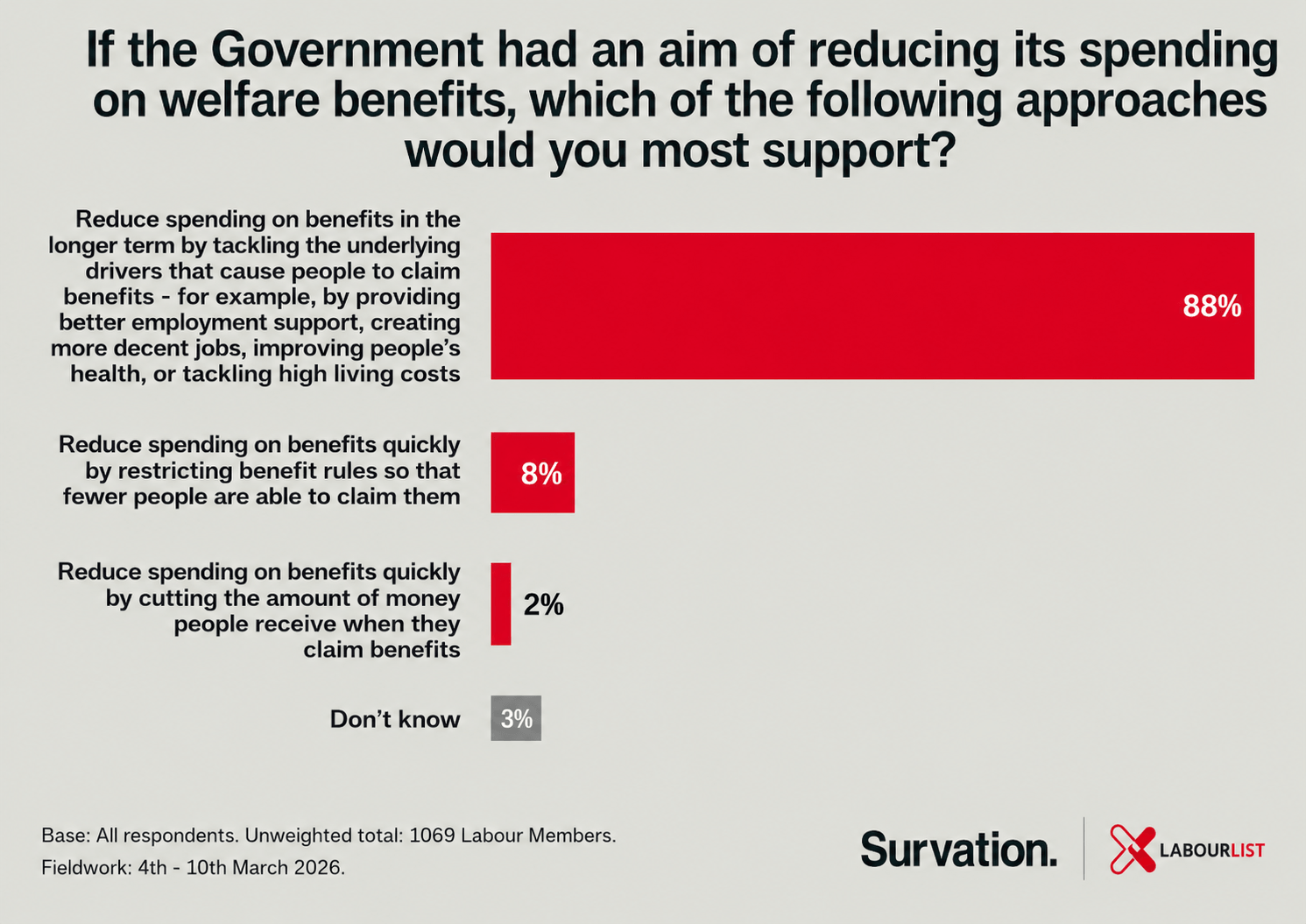
When asked how the government should reduce its spending on welfare benefits, the overwhelming response was to tackle root causes of poverty, rather than simply restrict who is able to claim them or cut the amount they receive. Almost 9 in 10 (88%) wanted an approach that tackled the drivers that lead people to claim benefits, for instance by providing employment support or tackling high living costs. A clear majority of all segments agreed on this point, highlighting the fact that the membership wants meaningful action on poverty and is firmly against cuts to social security.
Broad support for tax rises, with important nuances
For Labour members, increasing taxes holds some answers. Overall, 9 in 10 (91%) agree that taxes on sources of income that are currently taxed less than earnings (dividends, rental income etc.) should be increased, 86% agreed with tax increases to address income inequality, and 84% agree that increases should be used to invest in public services. To a lesser extent, members were still in agreement that taxes should be increased to balance the books (70%).
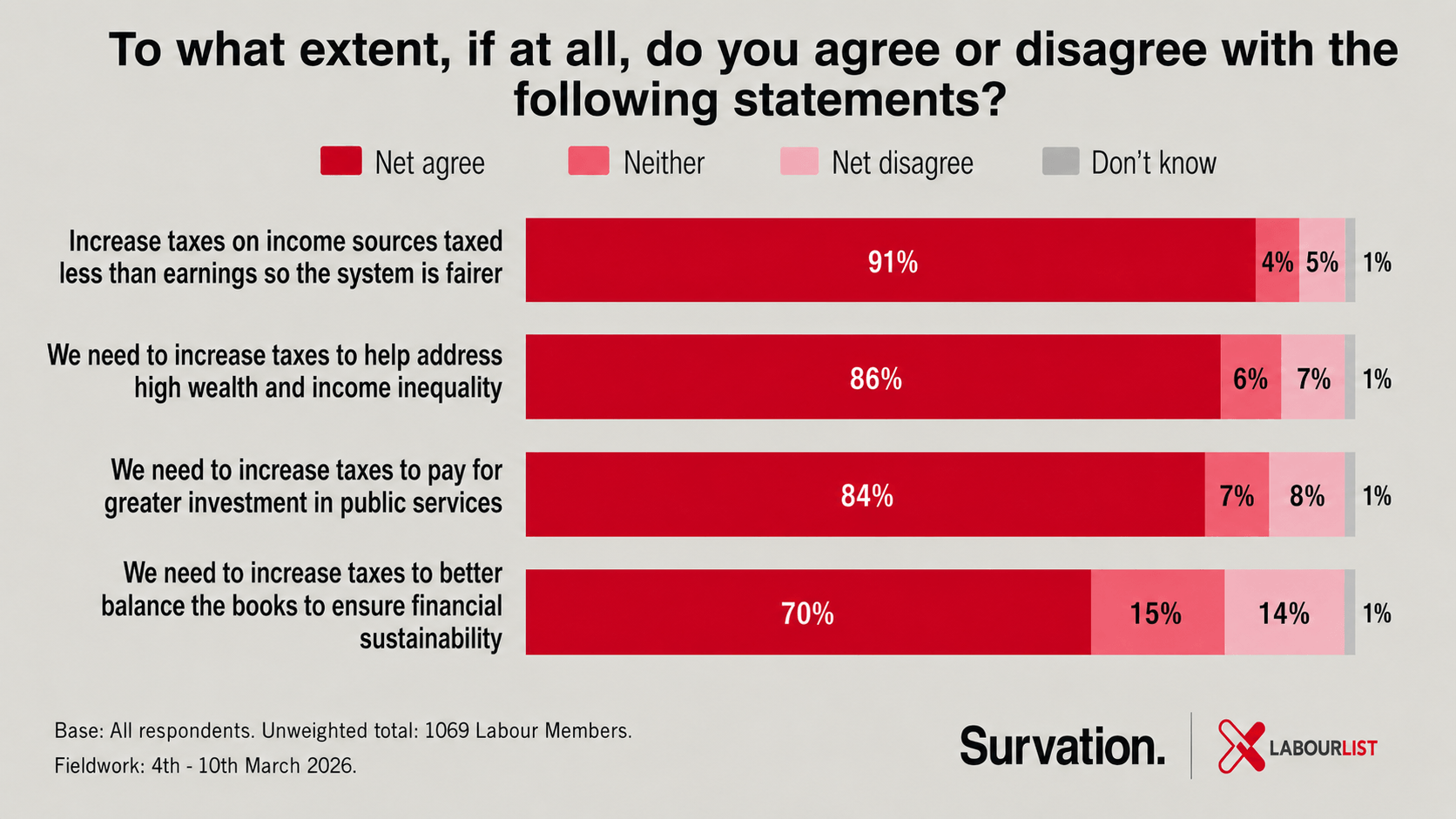
As one would expect by this point, the Instrumentalists were notably less likely to be in agreement with the rest of the membership on these points. On addressing income inequality through tax rises, 68% agreed with the statement, compared to 96% of Ideologues and 92% of Idealists. Similarly, 70% agree with tax rises to fund public services, 19 points below Idealists and 21 points below the Ideologues. Though still receiving majority agreement from this segment, it is clear that they have a much lower propensity to see tax rises as a route to solving salient issues.
The importance of establishing a National Care Service
On another battery of measures, one prominently emerged: establishing a National Care Service that reduces adult social care costs. A supermajority (92%) of members supported the proposal, including 85% of Instrumentalists and 97% of Ideologues. This was followed by high levels of support for nationalising water companies (91%), giving more protection to workers in the gig economy (90%), and rejoining the EU single market (88%). When members were told they could only pick one policy, 22% say that they would choose a National Care Service above introducing a wealth tax (16%) and nationalising water companies (12%).
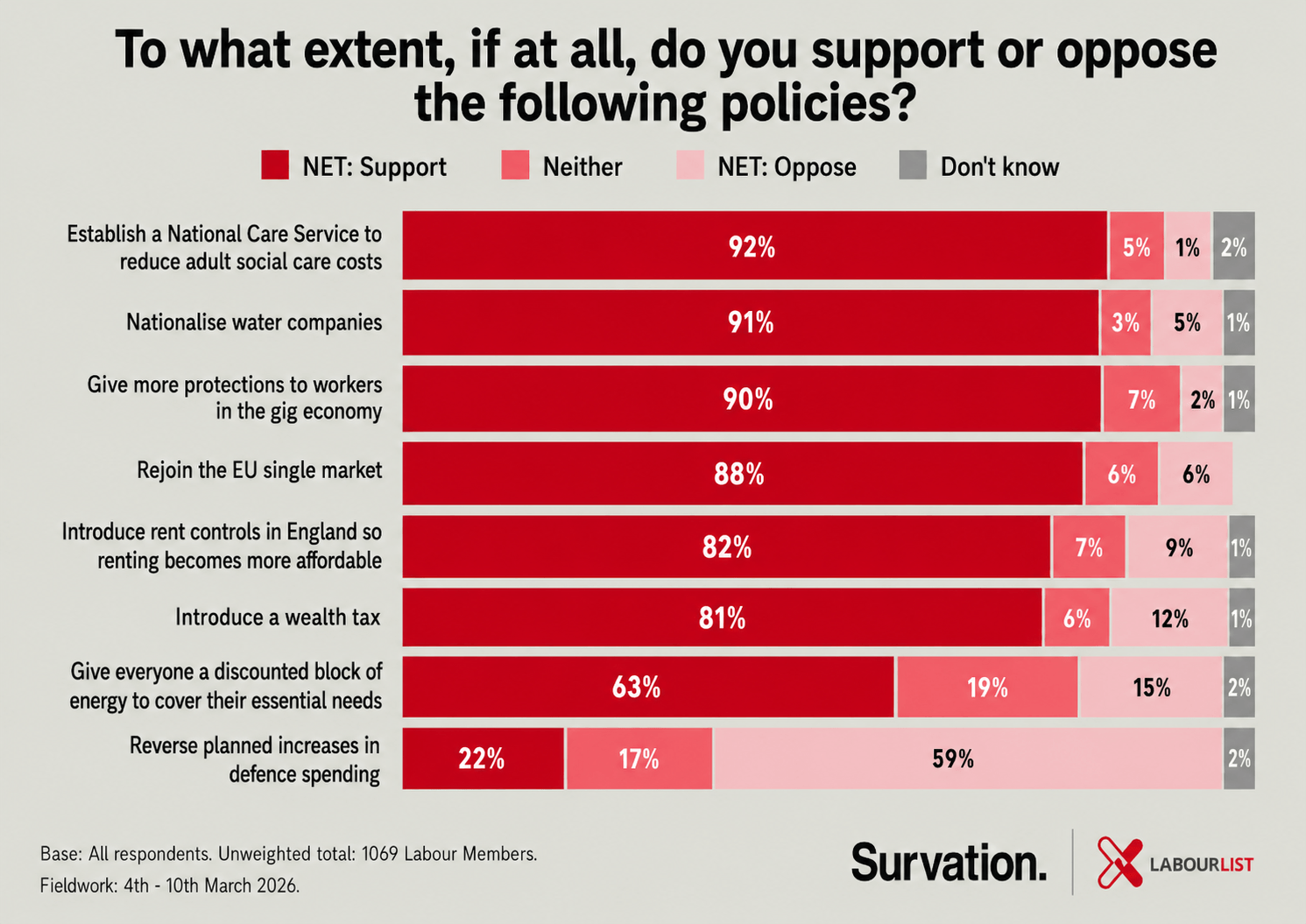
The key, then, to the hearts of Labour members and the three segments is not just a matter of policy. Transformative change aimed at fundamentally altering the country’s institutions, infrastructure, and economic model also holds strong appeal.
Bringing together the Labour Party’s three segments
Whilst Idealists have proven to be the pivotal segment within the Labour Party, with diverging attitudes existing between them and the Ideologues and Instrumentalists, our analysis proves that a broad range of measures aimed at tackling salient national issues receive significant support from all three groups.
Any candidate in a future Labour leadership contest can take solace in the fact that majorities – in some cases supermajorities – of members across all segments are supportive of measures to alleviate the cost-of-living crisis and tax changes, including improving home insulation, introducing rent controls, and increasing tax on income other than earnings. Additionally, the segments did not prove averse to transformative change, with overwhelming levels of support for a National Care Service and nationalising water companies.
The future Labour leadership possesses a mandate from all segments of the Labour membership to be bold. It would be in their interests to campaign on meaningful change and, more importantly, deliver it if they are victorious. Through doing so, they can unite the Idealists, Ideologues, and Instrumentalists within the party, build internal cohesion, and go out to the country as a whole with confidence.
________________________________________
Get the data
Survation conducted a poll of 1,069 Labour party members via LabourList’s database on behalf of the Joseph Rowntree Foundation between the 4th – 10th March 2026. Tables are available here.
________________________________________
If you are interested in commissioning a poll or to learn more about Survation’s research capabilities, please contact John Gibb on 020 3818 9661, email researchteam@survation.com or visit our services page.
For press enquiries, please call 0203 818 9661 or email media@survation.com
Survation. is an MRS company partner, a member of the British Polling Council and abides by their rules. To find out more about Survation’s services, and how you can conduct a telephone or online poll for your research needs, please visit our services page.
< Back