What UK Teenagers think in 2026: AI, the social media ban and their job prospects
Today’s teenagers are increasingly embracing AI, sceptical that a social media ban would be obeyed, and finding it difficult to get their first part-time job. Survation interviewed 2,087 teenagers across the UK, for BBC Radio 5 Live and BBC Bitesize’s annual Teen Summit, broadcast from Newcastle on 20 October. Read more on BBC Bitesize.
AI use among teenagers has risen sharply since 2023
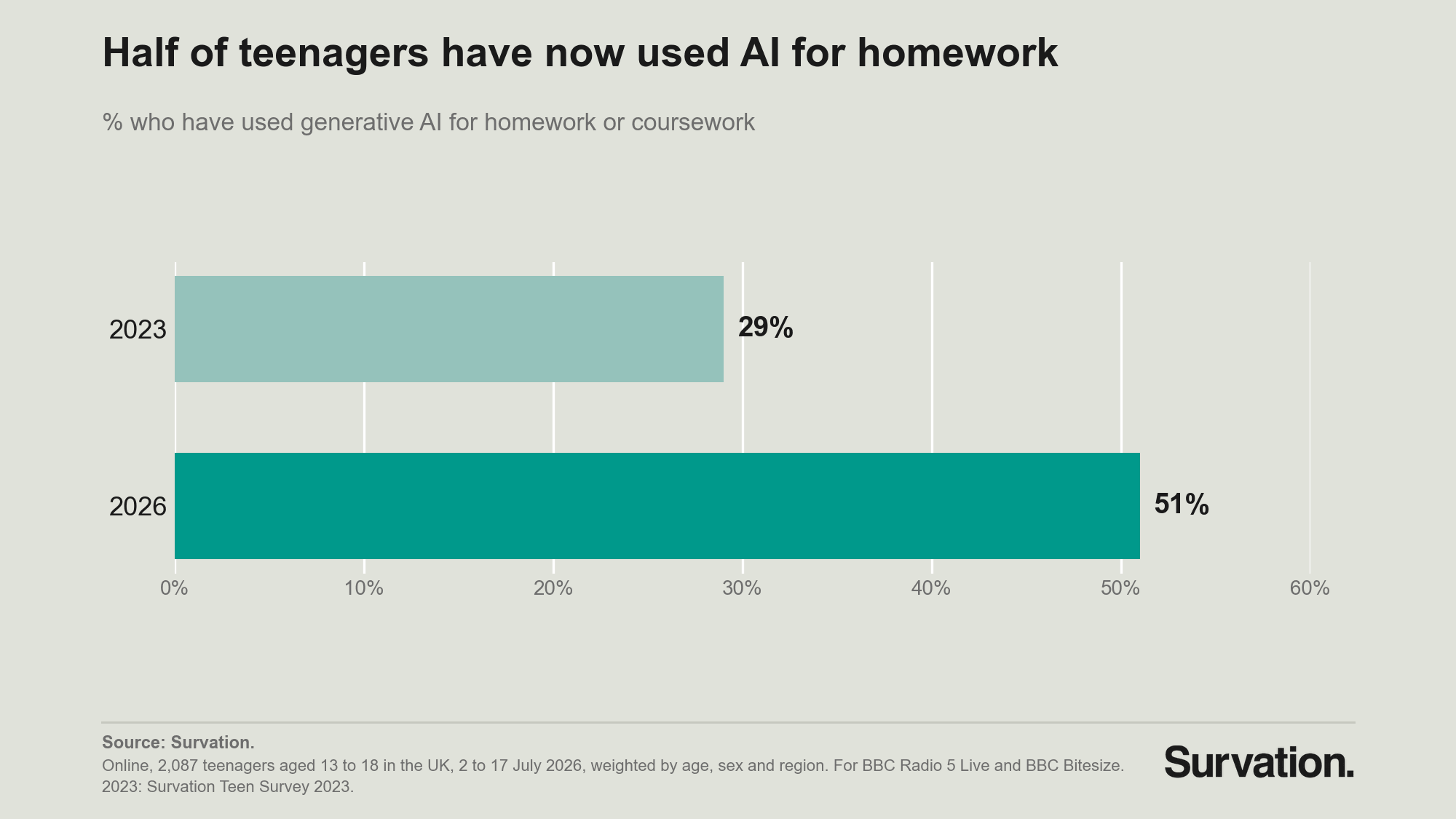
AI has become an established part of teenagers’ everyday lives. Six in ten (60%) currently use generative AI, with around a quarter of these (23%) using it daily or almost daily. More than half (51%) say they have used it for homework or coursework, up from 29% in the 2023 Teen Survey. And its use extends beyond schoolwork: among those who use it, 46% use it for entertainment and 43% for researching hobbies and interests.
However, teenagers’ use of AI is not without reservations. While most (66%) are not worried about AI, 28% are, and 39% think AI tools should be banned for under-16s. Among those who are worried, the main concerns are the impact on jobs (46%) and on human creativity (45%).
With new technologies changing the workplace, more than half of teenagers (56%) still think their school is preparing them well for the future of work, but nearly a third (32%) think it is preparing them badly.
Three in four teenagers spend 3+ hours a day on their phones
Phones take up a significant amount of most teenagers’ time, with 74% spending three or more hours on their phone each day, and support for restrictions on social media use is split, with 46% of teenagers thinking the government is right to restrict social media use for under-16s, while 44% think it is wrong. However, views differ sharply by age: half (50%) of 13-15 year olds, the age group that would be affected by the ban, think the government is wrong to restrict their social media use, compared to 39% who think it is right. In contrast, a majority (52%) of 16-18 year olds think the government is right to introduce restrictions, while 36% think it is wrong.
However, many teenagers think more needs to be done by the platforms themselves: 46% think social media companies should limit or remove autoplay and infinite scroll (21% disagree). Teenagers expect a ban to make a difference to screen time: 65% think it would reduce the time under-16s spend on their phones, including 37% who think it would greatly reduce it. But many doubt it would change much for them personally, with 39% saying it would make no difference to their own lives. And 81% think most people their age would try to get around it.
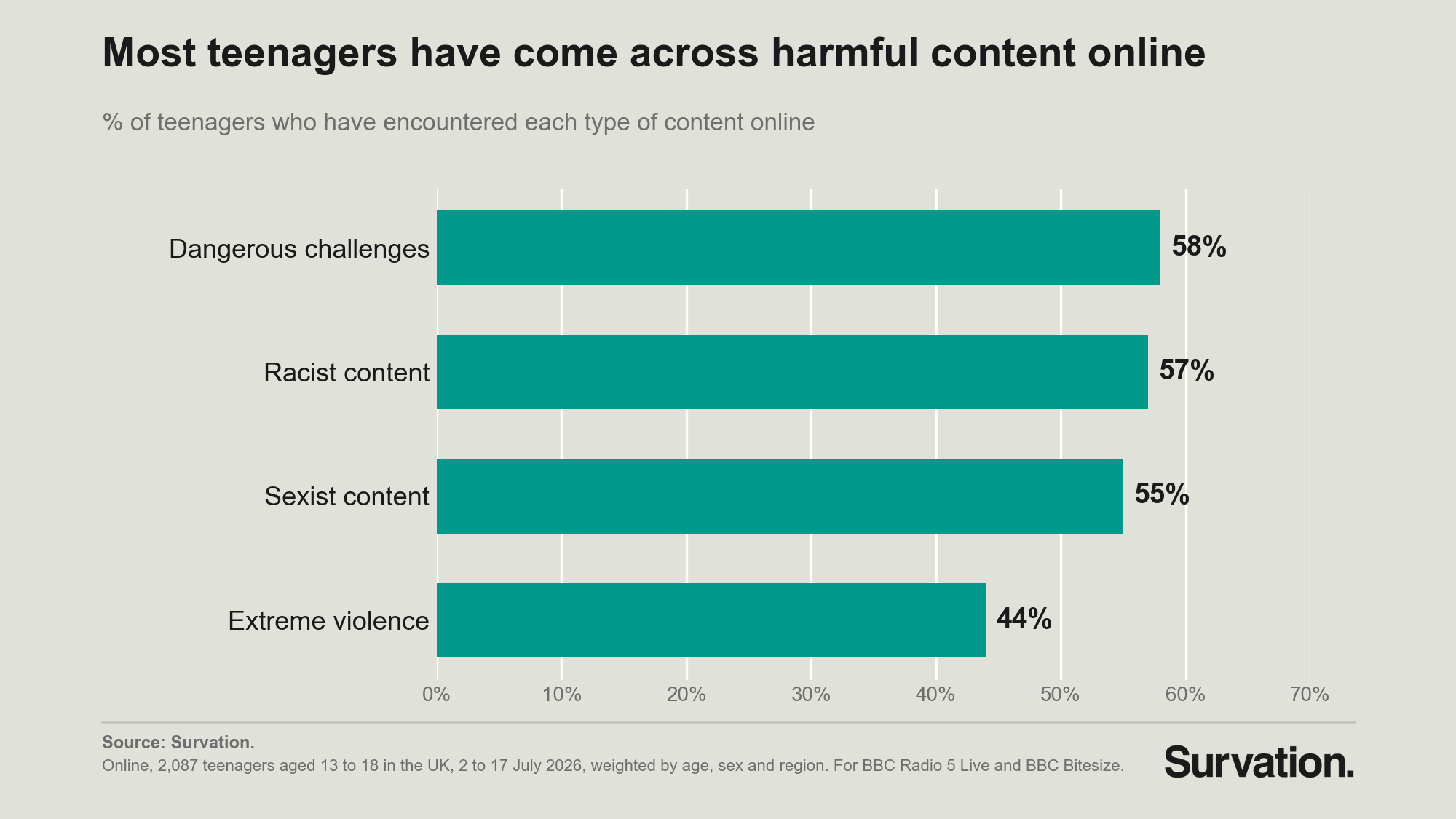
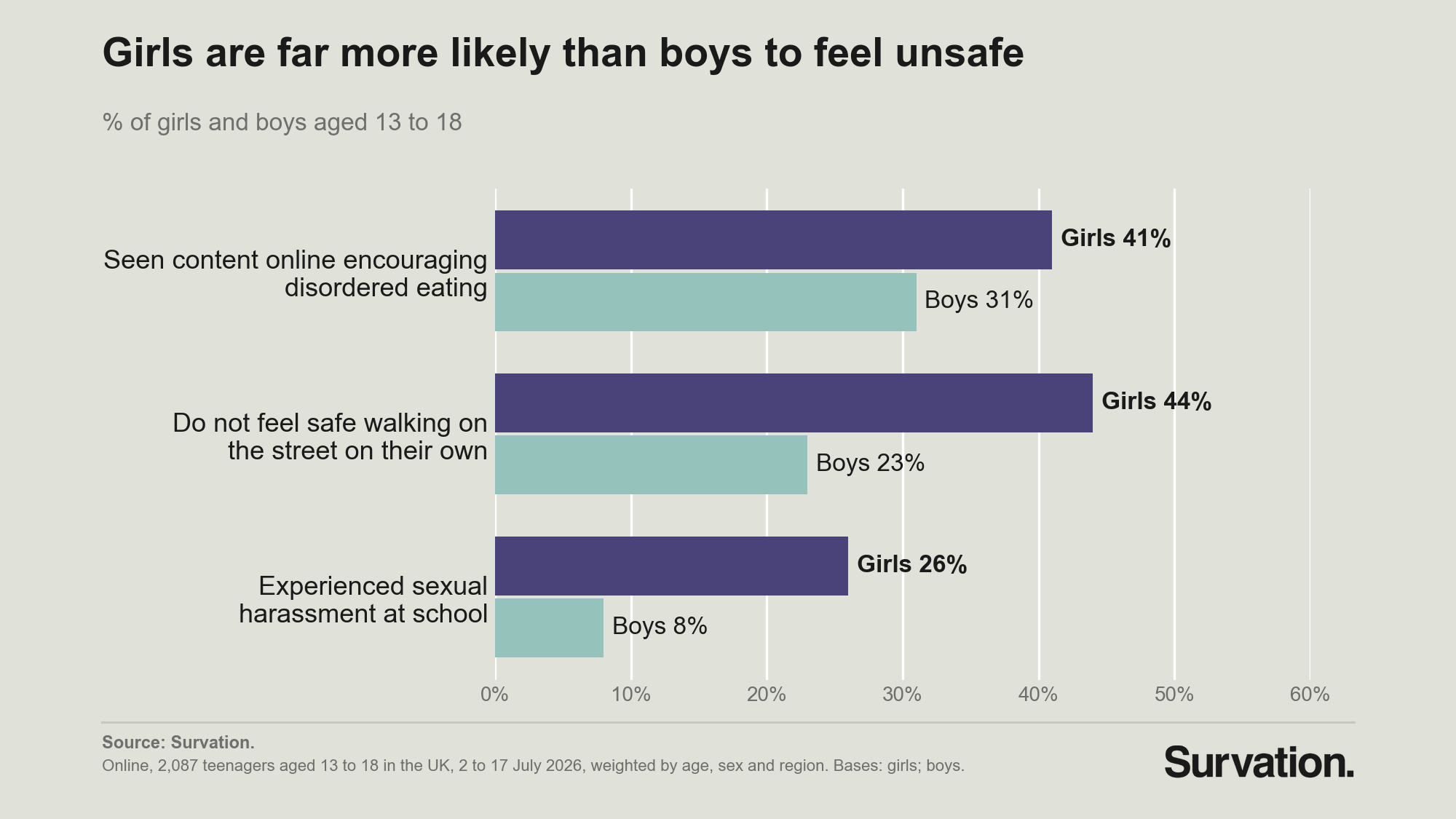
Exposure to harmful content online is widespread, with 58% of teenagers having encountered dangerous challenge content, 57% racist content and 44% extreme violence. More than half (55%) have also come across sexist content online. One in six (17%) girls had received unwanted nude images or videos, compared to 12% of boys. Girls were also more likely to have seen content encouraging disordered eating, with 41% reporting this compared to 31% of boys.
Outside social media, more than a quarter of girls (26%) have experienced sexual harassment at school, compared to 8% of boys, and 44% of girls do not feel safe walking on the street on their own, compared to 23% of boys.
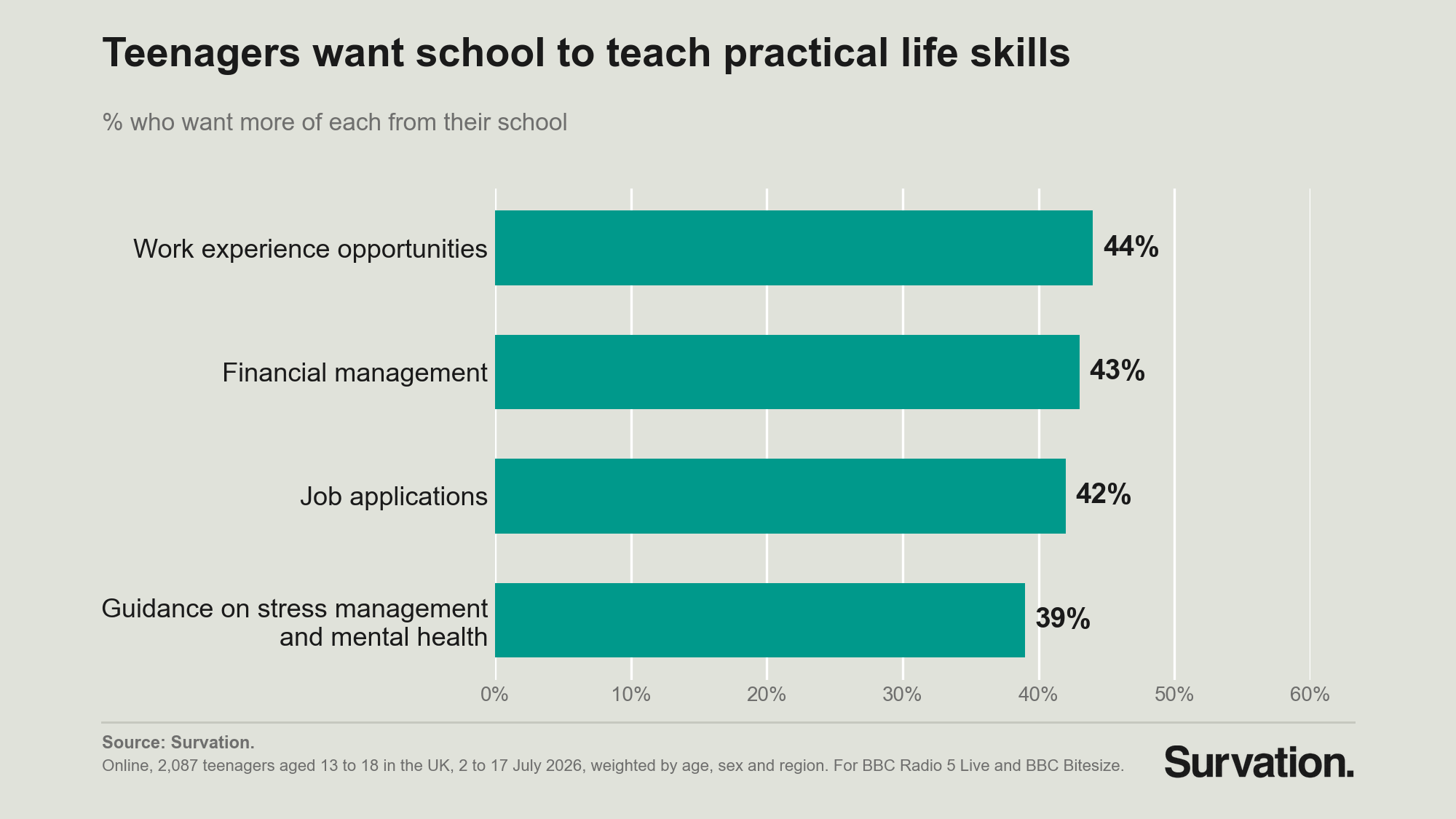
Teenagers want school to prepare them for real life
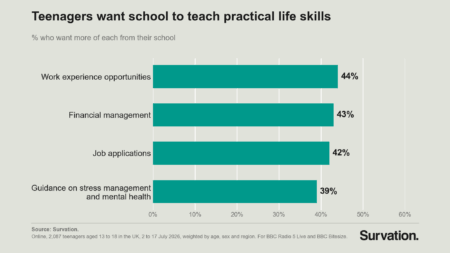
A clear message from teenagers is that they want their school to go further in practical education and life skills lessons, such as financial management (43%) and job applications (42%). 44% also want more work experience opportunities to be provided through their school.
The call for schools to do more goes beyond practical and life skills. Exams and grades are teenagers’ biggest worry: 37% name them as what they feel most anxious about, and 39% wanted more guidance on stress management and mental health strategies.
In terms of their prospects after leaving school, over a third (35%) of teenagers said going to university was not worth the cost.
Nearly half want a part-time job but don’t have one
For many teenagers, the barrier to work isn’t a lack of willingness, with 48% of teenagers saying they don’t have a part-time job but would like one. Of these, more than a third (38%) point to a lack of suitable vacancies in their local area, while almost a third (31%) have already applied for multiple roles without success. That rises to half among 16-18 year olds, the age group most likely to be looking for work.
Even those who do find work have had to persist for it. Of the fifth of teenagers with a part-time job, more than a third applied for five or more roles before securing one.
Despite concerns about AI, online harms and finding work, more than three quarters of teenagers (77%) remain positive about their future. With many calling for more focus on practical skills in school, teenagers are clear about the support they need to make the most of new tools and opportunities.
Get the data
Survation interviewed 2,087 teenagers aged 13-18 living in the UK online between 2 and 17 July 2026. Data were weighted by age, sex and region to the profile of 13-18 year olds in the UK.
Full data tables available here. Read more on BBC Bitesize.
< Back