Where will the public land on Andy Burnham’s Triple Lock changes and National Care Service plans?
Survation conducted an instant reaction poll of 1,548 UK adults yesterday evening to gauge the public’s reaction to Prime Minister Andy Burnham’s speech at the Labour Party Conference and his announcements around social care and changes to the triple lock from 2030 onwards. Fieldwork was conducted in the hours after the speech on the 29th of September 2026 on behalf of Mandate Research.
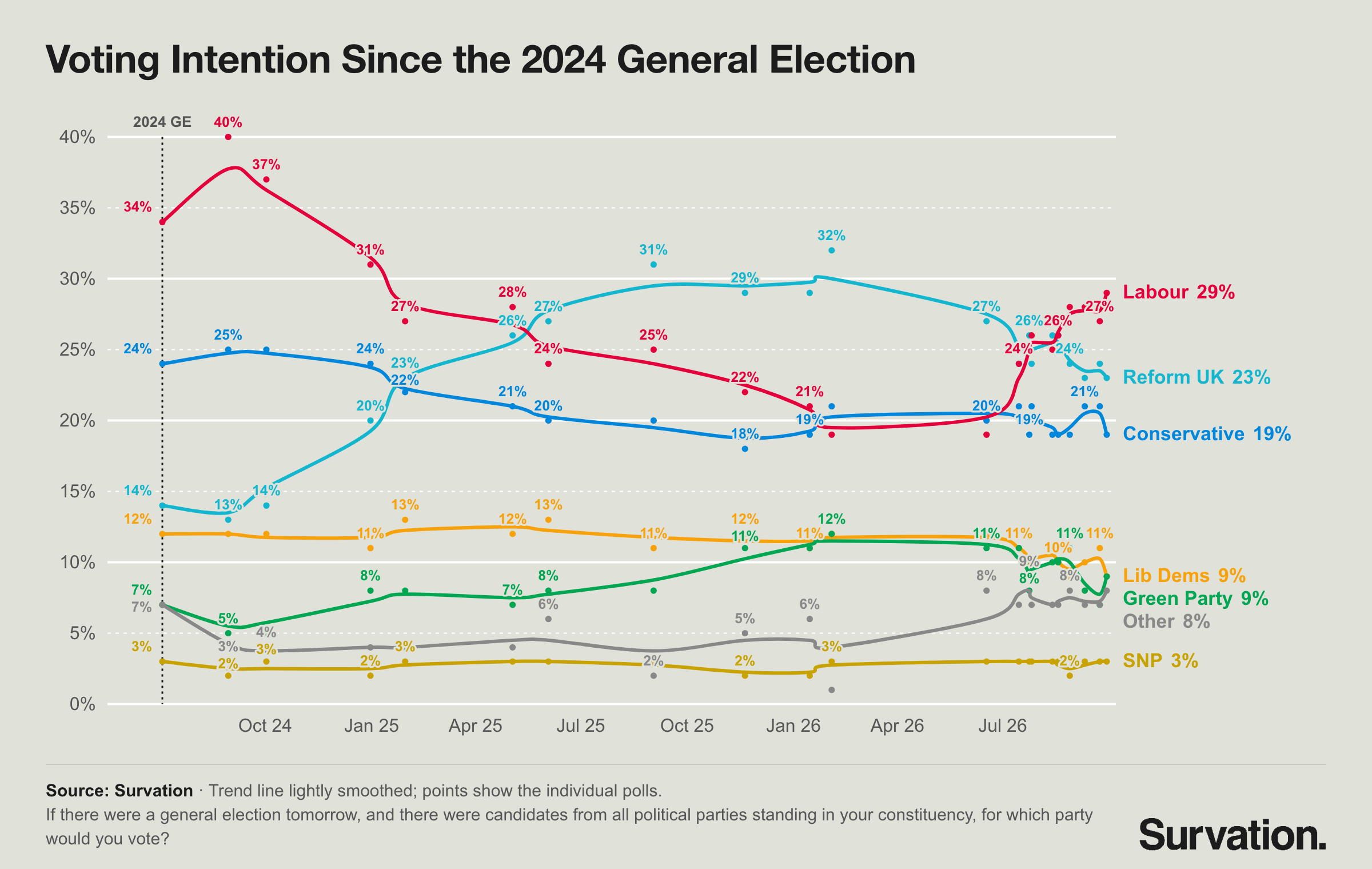
For background – voting intention were the questions asked first, and that puts Labour ahead of Reform by 5 points (Lab 28.7; Ref 23.3) and marks the highest vote share for Labour since December 2024 and a significant improvement of 10 points on its lowest share that we observed in February this year.
Initial impressions
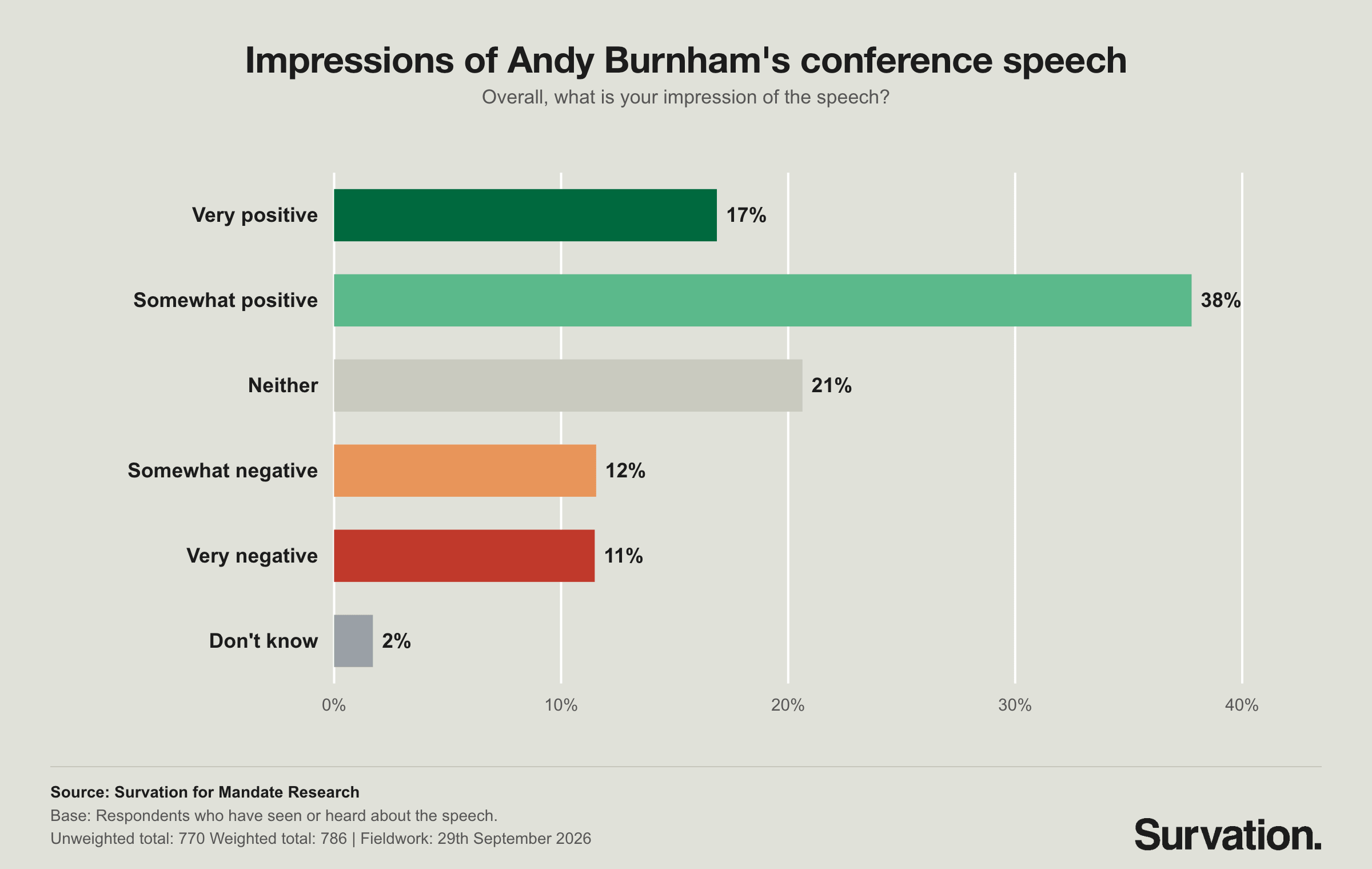
Just over half of the public (55%) had seen or heard something about the Prime Minister’s speech in the hours following it. Of those, a majority (55%) have a positive impression, compared to 23% who have a negative impression, turning instant reactions into a NET positive score of +32 points.
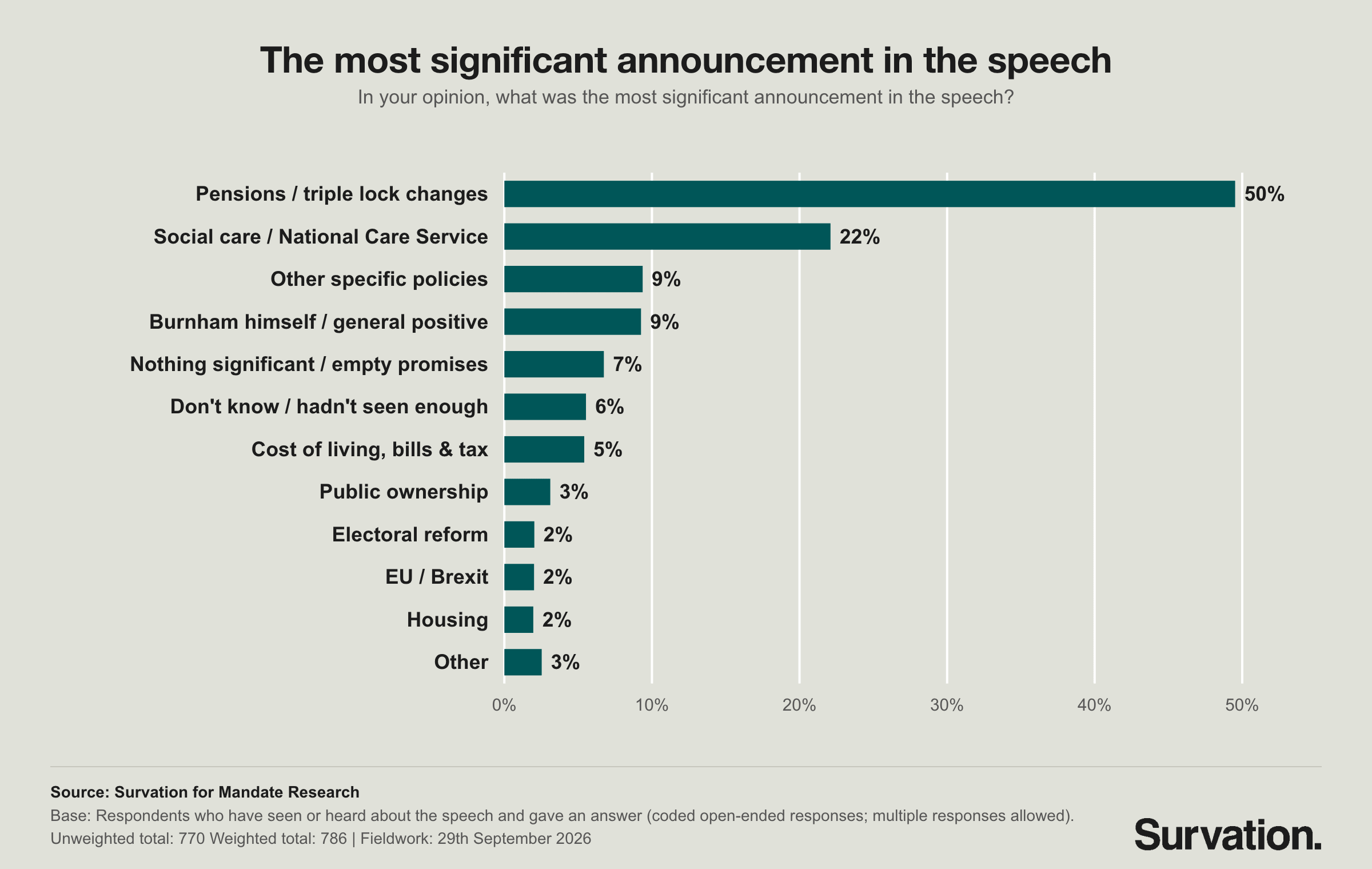
When asked to describe in their own words what was the most significant announcement in the speech, 50% of those who had seen or heard something about it mention the changes to the triple lock, with one in five (22%) mentioning the new national care service announcements, which will in part be funded by changes to the triple lock mechanism.
National Care Service and the Triple Lock
In his speech, the Prime Minister talked about the two things in relation to each other. To provide context to all respondents, we played two excerpts from his speech shown as the main explanatory clips by the BBC yesterday, one on the National Care Service plans and one on the pensions lock adjustment, the videos can be accessed below:
- PM Sets out his plan for new national care Service: https://www.bbc.co.uk/news/videos/ck78027x51wyo
- Pensions Lock to be adjusted by 2030: https://www.bbc.co.uk/news/videos/ckzdz9y853rjo
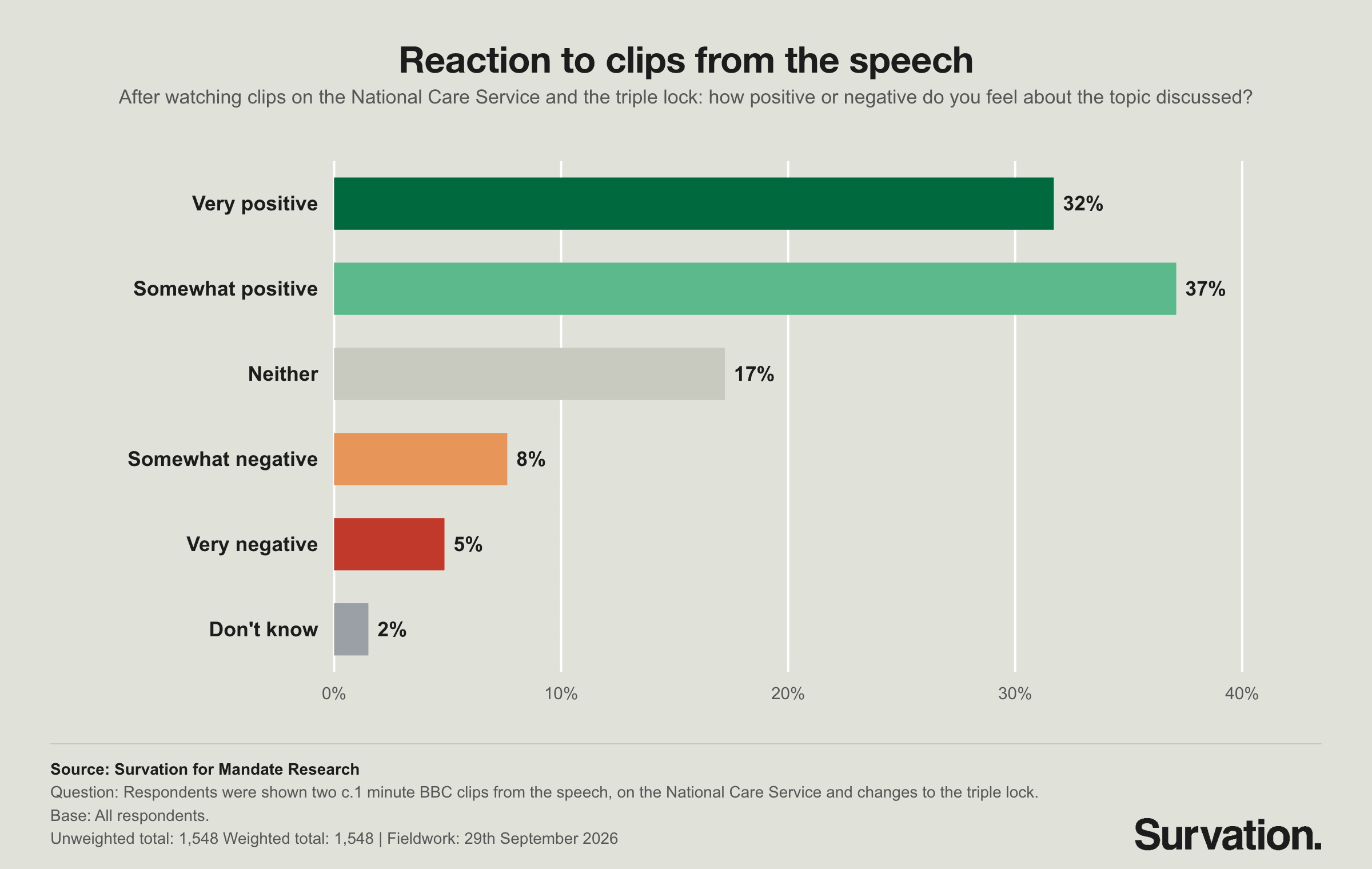
The instant reactions to this part of the speech were positive from almost 7 in 10 respondents (69%), compared to 13% who had a negative response, a NET score of +56.
To understand where the public will land on Burnham’s announcement, you first have to explain, as best you can, what the change is and why it is happening.
Most of the triple lock stays. Pensioners will still get a minimum rise of 2.5% a year, and will still get a rise in line with CPI inflation if that figure is higher. There will still be a link to workers’ pay too, but it becomes a backstop rather than an annual option: pensions follow earnings only if they have fallen behind them.
What goes is the ratchet. Under the current rules, pensioners can benefit twice from the same bout of inflation: once in the year prices surge, when the pension rises with inflation, and again in the years that follow, when wages rise to catch up and the pension rises with them. Over time that pushes the state pension up faster than either prices or earnings. Under the new rules it will still rise in real terms, only more slowly.
The why is that from April 2030, the government estimates the change will save about £15 billion a year by 2040, which it says will help fund a National Care Service in England.
Furthermore, the hypothecated framing of this tax where any money saved due the disappearance of the ratchet after 2030 will go towards funding part of his long term national care service plan, i.e. something that the affected pensioners will be able to benefit from.
There is no “scrapping” of the key features of the triple lock – they will still benefit from all three elements of the policy, it is a mechanism change that will save future governments money as they will not have to pay for the effects of inflation (and their flow-through to wages) twice.
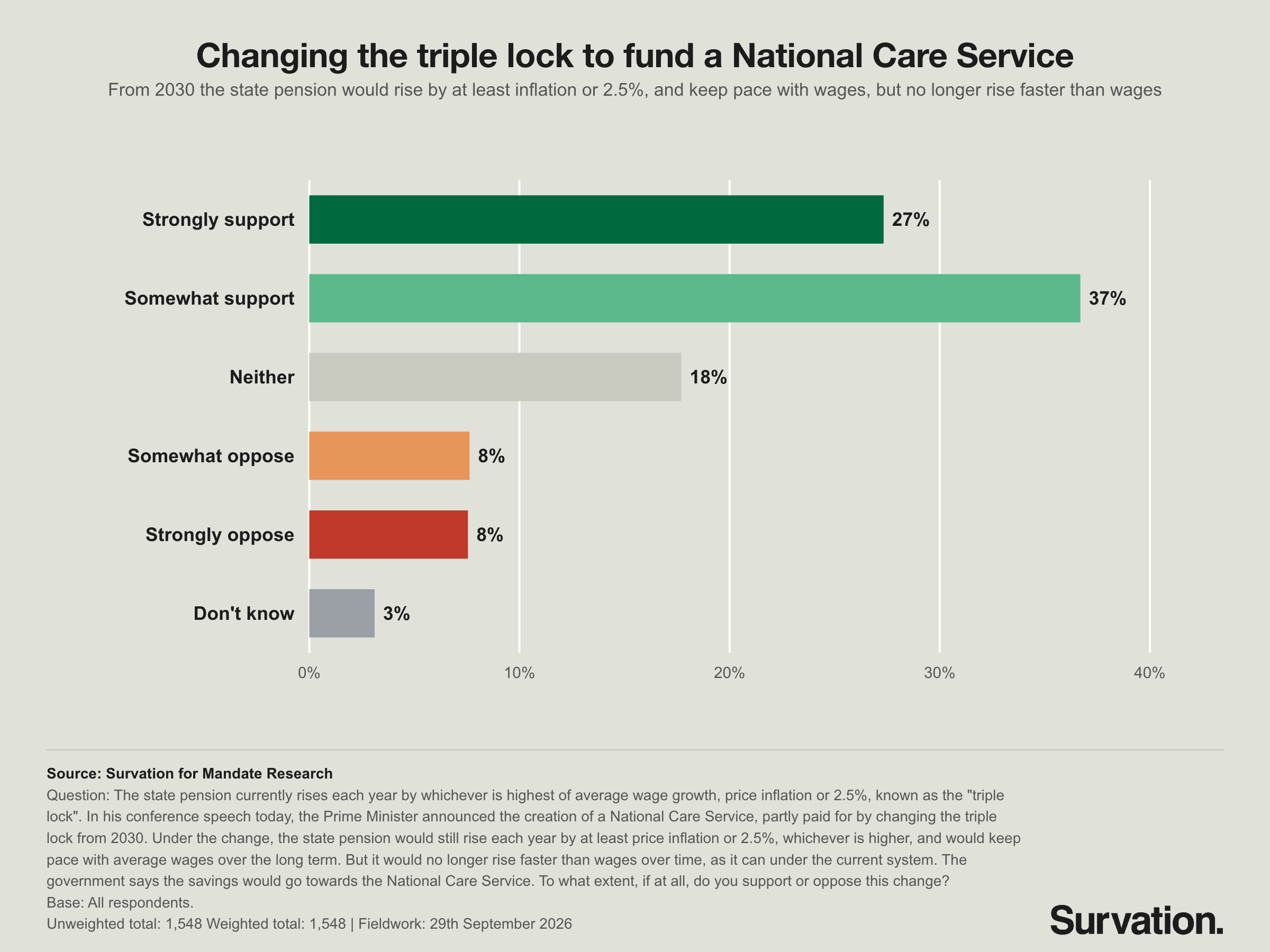
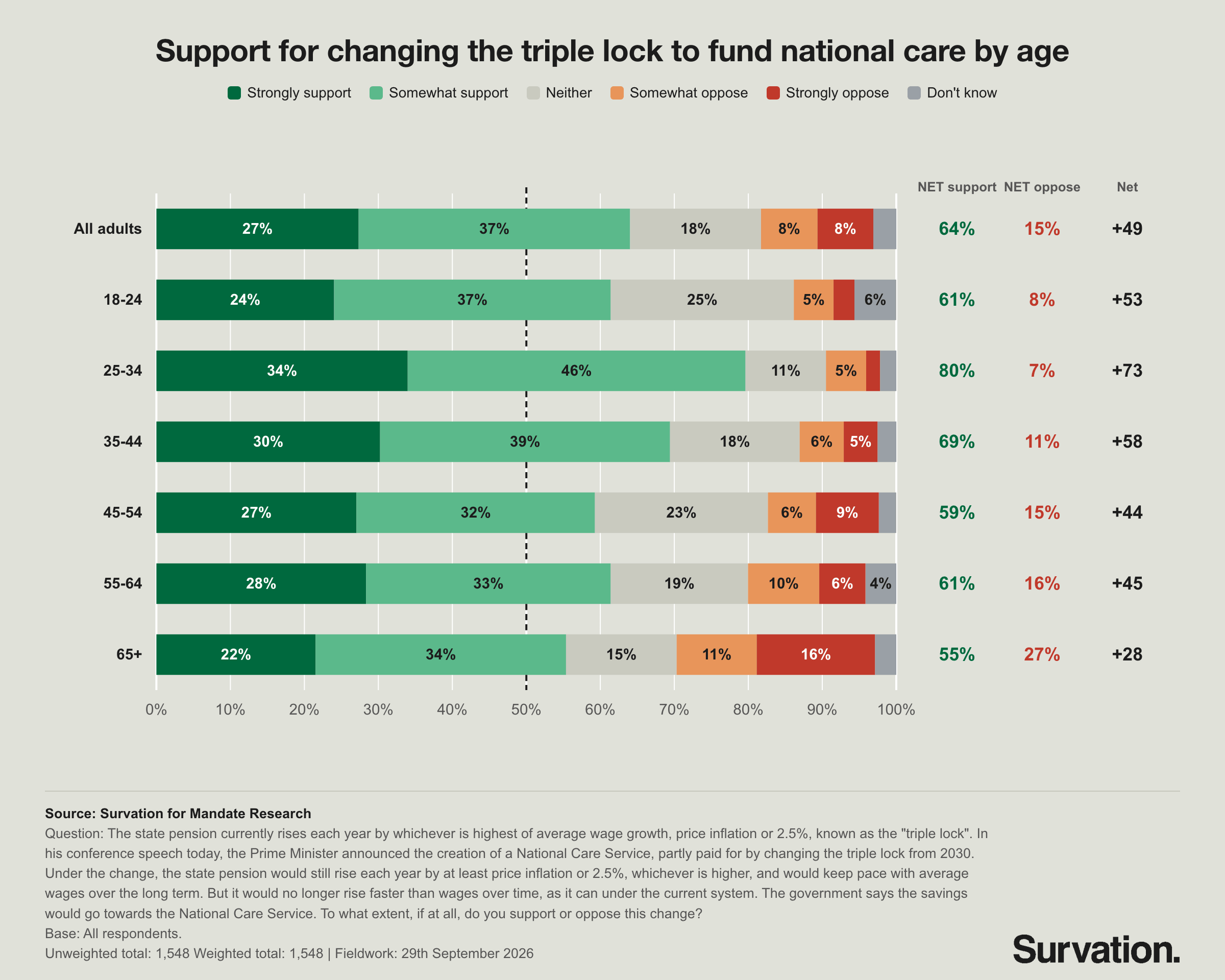
When we put this policy to respondents, a clear majority supported Burnham’s “hypothecated” reform to the Triple lock at a 49% net national support (64% support vs 15% oppose), including those respondents who will be most directly affected by the policies – the 55-64 and 65+ age groups.
GET THE DATA
Survation interviewed 1,548 adults aged 18+ living in the UK on behalf of Mandate Research on their views about the Prime Minister Andy Burnham’s speech at the Labour Party Conference. Fieldwork took place on the evening of the 29th of September. Data tables can be found here.
< Back